
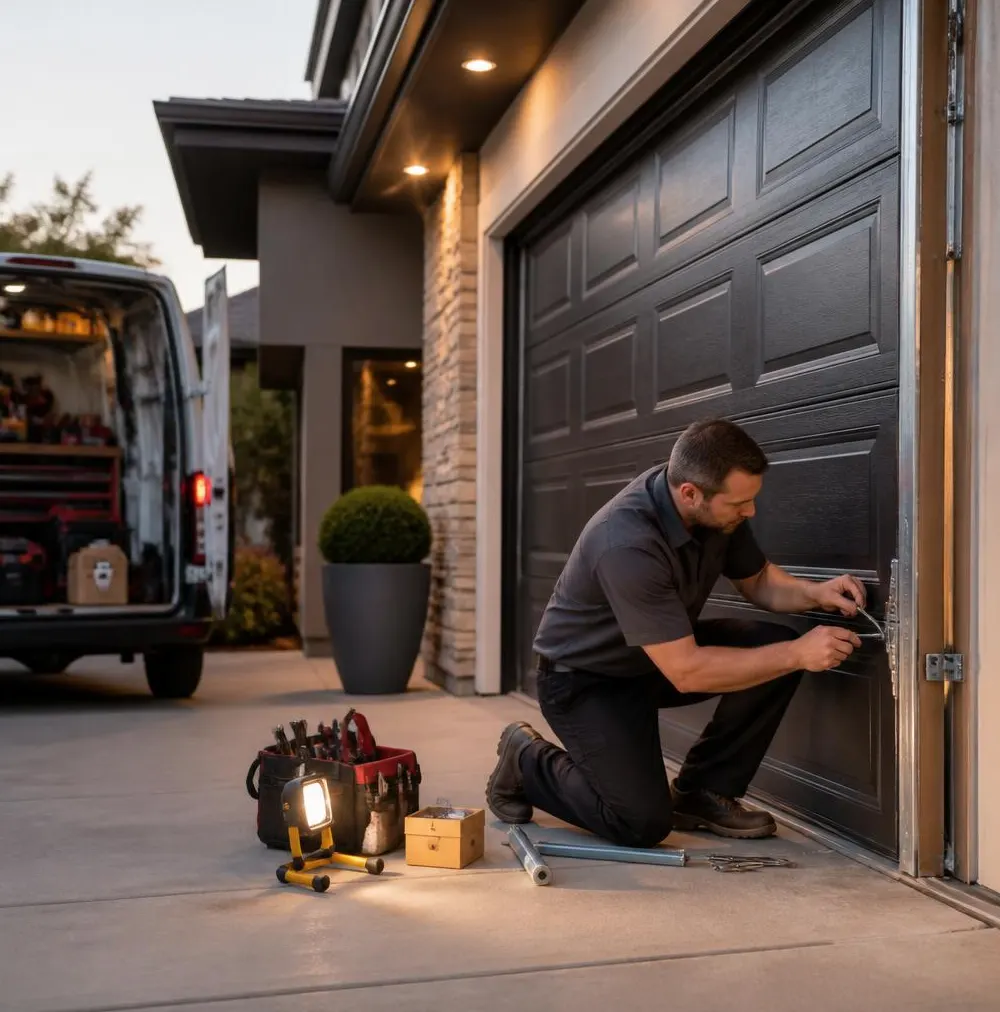
Get the Moving Parts Right First
If you only do one thing before winter, lubricate the moving parts and test the door's balance — most other problems trace back to one of those two things. The exceptions are doors with openers over eight or nine years old, doors that already groan or shudder when they move, and anyone whose door has been sitting unused in a detached garage all summer. Those situations call for a closer look now, not a quick squirt of oil and a hope for the best.
Why Cold Actually Breaks Garage Doors
Steel contracts in the cold, grease thickens, and rubber gets stiff and brittle. None of that is dramatic on its own, but combined they're why so many service calls here spike in the first hard cold snap of the year. A door that worked fine in October can suddenly bind, reverse unexpectedly, or refuse to open at all once overnight temperatures drop into the teens and twenties. The door didn't break overnight — it was already compromised, and the cold just removed its margin for error.
Weatherstripping and Sealing
Check the rubber seal along the bottom of the door and the weatherstripping around the sides and top. After a humid summer and the freeze-thaw cycles that start in late fall, this rubber often cracks, flattens, or pulls loose from its track. A gap you can slide a flat piece of paper through is letting in cold air, meltwater, and road salt spray if your garage faces the street. Replacing bottom seal is inexpensive and takes under an hour; it's one of the best returns on effort you'll get all season, both for comfort and for protecting whatever you store near the garage door.
Hardware, Rollers, and Salt Exposure
Road salt tracked in on tires and boots is hard on galvanized hardware. Hinges, rollers, and track can develop surface rust by midwinter, especially in garages that aren't heated. Wipe down the track and lower hardware now, then apply a silicone-based or lithium-based garage door lubricant to hinges, rollers, and the spring itself — not household oil, which attracts grit and gums up in cold weather. Nylon rollers need less lubrication than steel ones but still benefit from a light coat on the stems.
Springs Work Harder in the Cold
Torsion springs lose a bit of tension as metal contracts in low temperatures, which means the opener has to work harder to lift the same door. This is exactly why openers seem to strain or doors seem heavier in January than they did in August — it's not usually the opener failing, it's the spring system compensating for conditions it wasn't adjusted for. If your door feels noticeably heavier when lifted by hand with the opener disconnected, or if you hear a grinding or popping sound as it moves, the spring may already be near the end of its service life. Springs are under serious tension and are not a do-it-yourself repair.
Opener and Battery Backup
Cold weather is tough on batteries, including the backup battery in openers equipped with one. If your opener has a battery backup, test it now rather than during an outage when a storm knocks out power and temperatures are dropping. Check that the safety sensors near the floor are clean and properly aligned too — a sensor lens fogged with condensation or knocked slightly out of alignment by a bumped shovel or snowblower is one of the most common winter opener complaints, and it's usually a five-minute fix once you know to look there.
A Quick Pre-Winter Sequence
- Test door balance by disconnecting the opener and lifting by hand — it should stay roughly where you leave it.
- Inspect and replace bottom seal and side weatherstripping if cracked or gapped.
- Lubricate hinges, rollers, and springs with a cold-rated garage door lubricant.
- Clean and align opener safety sensors.
- Test backup battery if your opener has one.
- Listen for new grinding, popping, or straining sounds during operation.
When to Call Belvidere Garage Door Specialists
If your door feels heavier than it should, makes a new noise, or the opener strains and stutters, that's worth a call before it fails on a sub-zero morning. Our garage door maintenance visits cover balance, hardware, and lubrication in one pass, and if a spring has lost its temper or cracked, our spring replacement service gets it swapped out safely and correctly before it becomes a bigger problem. We'd rather catch it in November than get the call in January.
If you're in Belvidere, Rockford, Cherry Valley, Loves Park, or anywhere else in Boone County and want your garage door checked before the deep cold sets in, give Belvidere Garage Door Specialists a call today.